Automation Reliability vs. Traditional Support: Why Manufacturers Need a Proactive Approach
In today’s manufacturing environment, automation systems play a critical role in maintaining productivity, quality, and operational efficiency. As facilities become increasingly dependent on automated processes, minimizing downtime and improving system performance have become top priorities.
When discussing industrial automation, the terms support and reliability improvement are often used interchangeably. However, they represent two very different approaches to managing and maintaining automation systems.
While traditional support focuses on restoring functionality after an issue occurs, automation reliability focuses on understanding why issues happen and implementing strategies to prevent them from recurring.
Understanding the distinction between these approaches is essential for organizations seeking long-term operational stability and continuous improvement.
What Is Automation Reliability?
Automation reliability is the practice of continuously improving the stability, performance, and resilience of automation systems.
Rather than simply responding to failures, reliability-focused teams analyze recurring issues, identify underlying causes, and implement sustainable solutions that reduce future disruptions.
The objective is to create systems that operate consistently over time while minimizing unexpected failures and operational risk.
The Support Trap: Closing Tickets vs. Solving Problems
Traditional automation support is often reactive by nature.
When a system issue occurs, the immediate goal is to restore functionality as quickly as possible. This approach is critical for minimizing production interruptions and maintaining operations. However, it frequently focuses on addressing symptoms rather than identifying the root cause of the problem.
As a result, the same issue may continue to occur repeatedly, consuming resources and creating ongoing operational challenges.
Reliability improvement takes a different approach.
Instead of asking, “How do we fix this issue today?” reliability-focused teams ask, “Why does this issue continue to happen?”
By applying methodologies such as Root Cause Analysis (RCA), organizations can investigate recurring failures, identify contributing factors, and implement corrective actions that help prevent future occurrences.
This shift from reactive troubleshooting to proactive improvement can significantly improve system performance over time.
Using Data to Drive Reliability Improvements
One of the defining characteristics of an automation reliability program is the use of data to support decision-making.
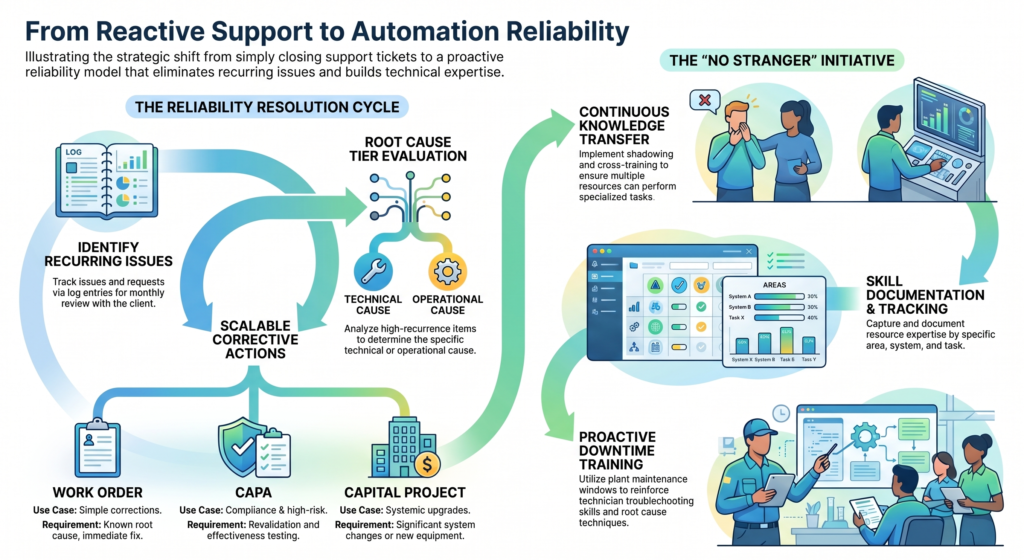
Every issue, service request, alarm, and system event provides valuable information about the health of an automation environment. By tracking these events and analyzing trends, organizations can identify recurring problems and prioritize improvement efforts based on actual system performance.
A structured review process allows teams to evaluate reliability data on a regular basis and determine the most appropriate actions.
Depending on the findings, improvement initiatives may include:
Technical Adjustments
Minor configuration changes, maintenance activities, or system optimizations that improve performance and reduce recurring issues.
Corrective and Preventive Actions
Structured efforts to address underlying causes, implement solutions, and verify their effectiveness over time.
System Improvement Projects
Larger modernization or optimization initiatives designed to enhance reliability, maintainability, and long-term operational performance.
By making decisions based on data rather than assumptions, organizations can focus their resources on the issues that have the greatest impact on system reliability.
The Human Element: Knowledge Transfer
Reliable automation systems depend not only on technology but also on the people who operate, maintain, and support them.
One of the most significant risks within manufacturing environments is the loss of critical knowledge when experienced personnel retire, transfer roles, or become unavailable.
For this reason, many reliability-focused organizations incorporate knowledge transfer strategies into their operational practices.
Effective knowledge transfer may include:
Shadowing and Mentoring
Providing opportunities for experienced personnel to share troubleshooting techniques, operational insights, and best practices with newer team members.
Skill Mapping
Documenting technician competencies across equipment, systems, and manufacturing areas to identify gaps and ensure adequate support coverage.
Continuous Learning During Downtime
Using planned maintenance periods and production shutdowns as opportunities to reinforce training, improve troubleshooting capabilities, and share lessons learned.
These activities help preserve institutional knowledge and improve an organization’s ability to respond effectively to future challenges.
Benefits of a Reliability-Focused Approach
Organizations that invest in automation reliability often experience benefits that extend beyond reducing downtime.
A proactive reliability strategy can help:
- Reduce recurring automation failures
- Improve system availability and performance
- Enhance operational efficiency
- Support continuous improvement initiatives
- Preserve critical technical knowledge
- Reduce long-term maintenance costs
- Strengthen overall manufacturing reliability
Over time, these improvements can contribute to more stable operations and better utilization of automation investments.
Moving from Reactive to Proactive Operations
The difference between traditional support and automation reliability is the difference between restoring functionality and continuously improving system performance.
While reactive support remains necessary for addressing immediate issues, organizations that focus solely on responding to problems often find themselves dealing with recurring failures, unplanned downtime, and increasing maintenance demands.
A reliability-focused approach seeks to understand why issues occur, using data, root cause analysis, and knowledge-sharing practices to drive long-term improvements. Over time, this approach can help create more stable operations, reduce operational risk, and improve overall system performance.
As automation systems continue to grow in complexity, reliability is becoming an increasingly important component of manufacturing success. Organizations that invest in proactive reliability strategies are often better positioned to support continuous improvement, maintain operational consistency, and adapt to future challenges.
- Published in Automation Support, General, Technology